Why a sworn translation needs explaining first
A sworn translation is rarely planned. It becomes urgent the day a municipality, a court or an employer asks for it.
CertiDocs design and operation by Hebora.
The short version
At the worst moment
The need arrives with a deadline: a file, an appointment, an enrolment that will not wait.
Without the vocabulary
Sworn, legalised, apostille: three words people look up while already needing them.
Four languages
The site exists in Dutch, French, English and German, like the files themselves.
Checkable
Every statement about the procedure points to the official text behind it.
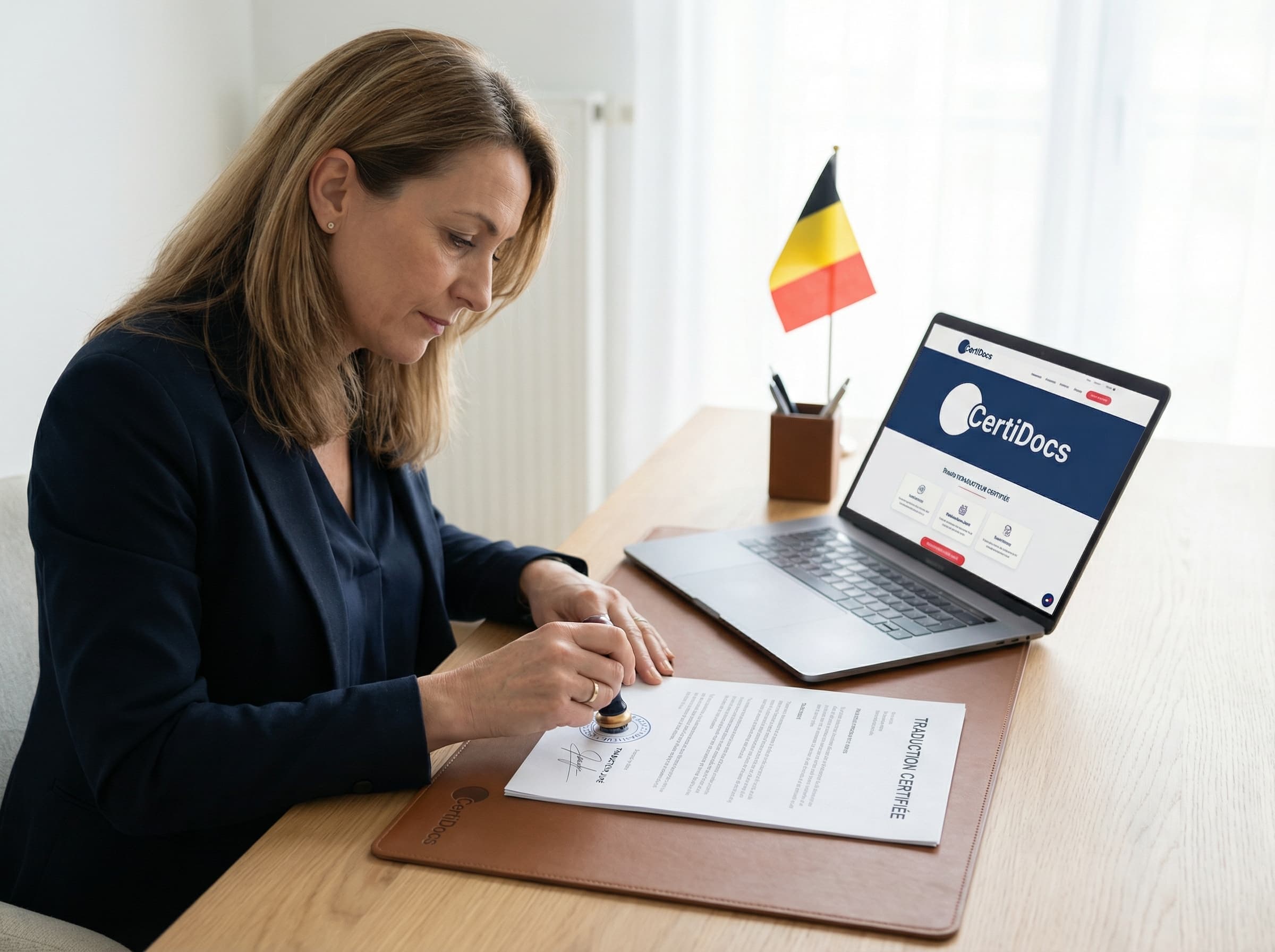
The problem this site solves
Someone who needs a sworn translation usually does not know what to ask for. They know an authority demands a document and that it must be «official». Whether a sworn translator's signature is enough, or whether a legalisation or an apostille has to follow, stays unclear.
As long as that answer lives inside a phone call, it arrives late. You call, you explain your case, you get an estimate, and you start again with the next office to compare.
The site was built the other way round: explain first what the authority actually requires, then take the request.
What was put online
The guides cover the cases that really occur: a birth certificate for a marriage, a diploma for an employer, a criminal record extract, a driving licence, a court judgment. Each says which form the authority accepts.
The request asks for the document itself, because a price given without seeing the file is a guess. What happens to that file afterwards is described separately.
And the whole site exists in four languages, because a Belgian file rarely runs in only one.
What this project makes possible today
Someone who discovers at 10 pm that their file needs a sworn translation finds the answer to their exact question without waiting for the morning.
The turnaround and the price are announced before the request, not after, and the file sent stays in private storage with time-limited access.
None of it asks you to take our word for it: the pages are there, with their sources.
Who built this site
The public site, the request form, the file tracking and the body of guides were designed and developed with Hebora.
The rule set at the start still holds: no statement about the procedure without the official text that supports it.
hebora.beThe detail of this project — what was built, and why — is told on Hebora's side in the case study for this site.
Your case first
Send the document: you get the form your authority accepts, the turnaround and the price before deciding anything.